$15.99
$19.99
50% OFF! Hot items selling fast—Grab them before they're gone!
 Unconditional Satisfaction GuaranteeNo Shipping Fees Above 302 Months to Decide. Returns Simplified.
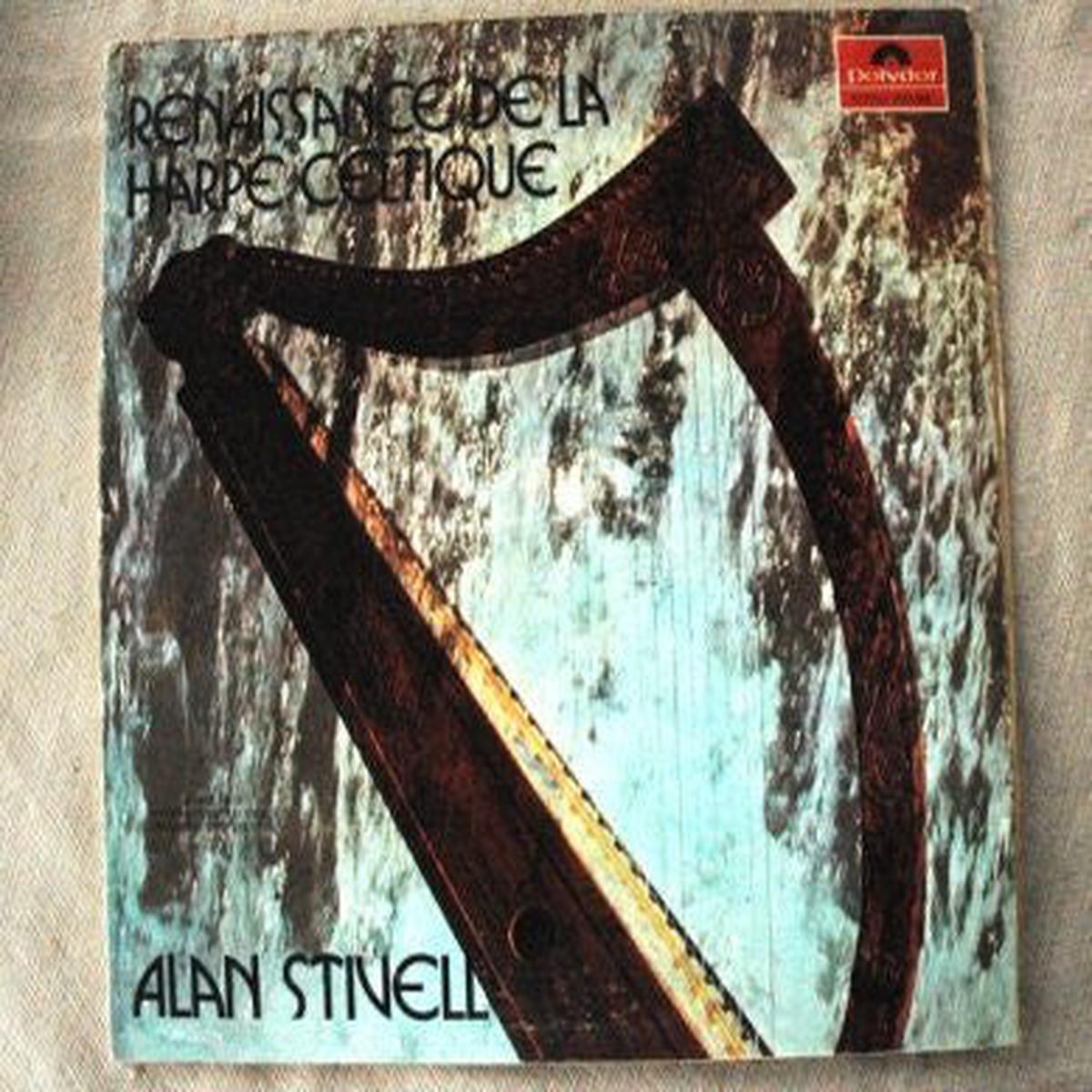
Alan Stivell Renaissance De La Harpe Celtique – 1973 – Folk Rock, Folk (vinyl)
stock photo only
Sleeve Condition (Out of 10) ~8 slight waer
Label Condition (Out of 10) ~ 10
Vinyl Condition ~ (Out of 10)
Side 1 -10
side 2 – 10
BIN # *53 / *51 excellent
“Crystal Harp”solid-body(Goas-Stivell, 1987)
Alan Stivell was born in theAuvergnattown ofRiom. His fatherGeorges (Jord in Breton) Cochevelouwas a civil servant in the French Ministry of Finance who achieved his dream of recreating aCelticorBretonharp in the small town ofGourin,Brittany[2]and his mother Fanny-Julienne Dobroushkess was ofLithuanian-Jewishdescent. In 1953, Alan began playing the instrument at the age of nine under the tutelage of his father and Denise Megevand, a concert harpist. Alan also learned Celtic mythology, art and history as well as theBreton language, traditional Breton dance and the Scottishbagpipeand thebombarde, a traditional Breton instrument, from theoboefamily. Alan began playing concerts at eleven years and studying traditional Breton, English, Irish, Scottish, and Welsh folk music, also learning the drum, Irish flute, and tin whistle.[1]He competed in and won several Breton traditional music competitions in the Bleimor Pipe band.[3]Alan spent his childhood inParis, with its cosmopolitan influences. But he fell in love withBreton musicandCeltic culturein general, and often went back in his teens to Brittany.[1]
Alan’s first recording came in 1960 (“Musique gaelique”), a single that was followed by the LPTelenn Geltiekin 1964. He already recorded solo harp and harp backing singers in 1959 with Breiz ma bro (“Brittany my country”) and a Mouez Breiz EP (“Voice of Brittany”) with the female singer Andrea Ar Gouilh. His stage name, “Stivell”, means “fountain” or “spring” in Breton. This name refers both to the Breton renewal and to his surname “Cochevelou” (an evolution of kozh stivello, “the old fountains”).[1]
With a new bardic harp with bronze strings, Stivell began experimenting with modernized styles of music known asCeltic rock. In 1966, Alan Stivell began to perform and record as a singer. The following year, he was signed by Philips (Universal). This was during the birth of the New Breton and Celtic music movement. In 1968, after two years of touring and regular appearances at the American Students and Artists Center in Paris, Alan joined theMoody Bluesonstage to perform in London’s Queen Elizabeth Hall.[4]
In 1970, Stivell released his first hits, the single “Broceliande” and the album “Reflets”, both on thePhilipsrecord label. He became closely associated with the burgeoning Bretonroots revival, especially after the release of the purely instrumental 1971 albumRenaissance of the Celtic Harp, which won one of the most famous awards in France, the prize of theAcadmie Charles Cros.[3]
The music critic Bruce Elder wrote of the albumRenaissance of the Celtic Harp:
People who hear this record are never the same again. Renaissance of the Celtic Harp, one of the most beautiful and haunting records ever made by anybody, introduced the Celtic harp to many thousands of listeners around the world. To call this music gorgeous and ravishing would be the height of understatementindeed, there aren’t words in the English language to describe this record adequately. The opening work, ‘Ys’, is a piece inspired by the legend of the fifth century capital of the kingdom ofCornwall, (most versions of the legend place the city in theDouarnenez Bayon the coast ofBrittany), [said to have been] engulfed by a flood as punishment for its sins. (Debussywrote one of his finest works, “The Engulfed Cathedral,” later adapted by the groupRenaissanceinto “At the Harbour” on the 1973 albumAshes Are Burning, based on the same legend). The reflective “Marv Pontkellec” is every bit as sublimely beautiful, but the highlight of this record is “Gaeltacht,” a 19-minute musical journey by Stivell’s harp across theGaeliclands ofIreland,Scotland, and theIsle of Man.[5][6]
On 28 February 1972 Stivell performed a concert in theOlympiatheater, the most famous music hall in Paris, where Alan and his band played music combining traditional Celtic music with modern sounds (electric guitar, drums, etc.). This concert made Stivell and his music well known throughout France.[2]At this time, Stivell’s eclectic approach to music was very new and was considered risky, but it soon became popular. Over 1,500,000 records of that concert (“A l’Olympia”) were sold. Alan Stivell’s new found fame propelled him to tour across France, the United Kingdom, Canada and the United States. He continued recording, and published a collection ofBreton poetryin 1976.[2]With his 1980Symphonie Celtique, he mixed for the first time elements of rock, a symphonic orchestra, Celtic instruments and such non-European ethnic elements asBerbervocalistDjourhaandsitaristNarendra Bataju.[3]
The folk music revival faded somewhat in the 1980s. Though Alan Stivell still maintained a popular following, he did not reach the heights of popularity that he had in the 1970s. He continued touring in many parts of the world and recording for a loyal fanbase. He also worked with the English singerKate Bush.
| Alan Stivell | |
|---|---|
| Stivell in concert atBrest(Brittany), 2013 | |
| Background information | |
| Birth name | Alan Cochevelou |
| Born | 6 January 1944(age72) Riom,Auvergne,France |
| Genres | Celtic music |
| Occupation(s) | Singer-songwriter-composer-musician |
| Years active | 1960-present |
| Labels | Keltia III |
| Website | alanstivell.bzh |
Label:Polydor 2424.069
Format:Vinyl, LP, Album, GatefoldCountry:CanadaReleased:1973Genre:Rock,Folk, World, & CountryStyle:Folk Rock,Folk
| A1 | Ys | |
| A2 | Marv Pointkalleg | |
| Extraits Des Manuscrits Gallois | ||
| A3a | Ap Huw | |
| A3b | Penllyn | |
| A4 | Eliz Iza | |
| Gaeltacht | ||
| Ba | Caitlin Triall | |
| Bb | Port Ui Mhuirgheasa | |
| Bc | Airde Cuan | |
| Bd | Na Reubairean | |
| Be | Manx Melody | |
| Bf | Heman Dubh | |
| Bg | Gaelic Waltz | |
| Bh | Struan Robertson (Strathspey) | |
| Bi | The Little Cascade | |
| Bj | Braigh Loch Lall | |
| Bk | Port An Deorai |